



Inside Heroes
vol.5

Passing the Baton Through Blossoms
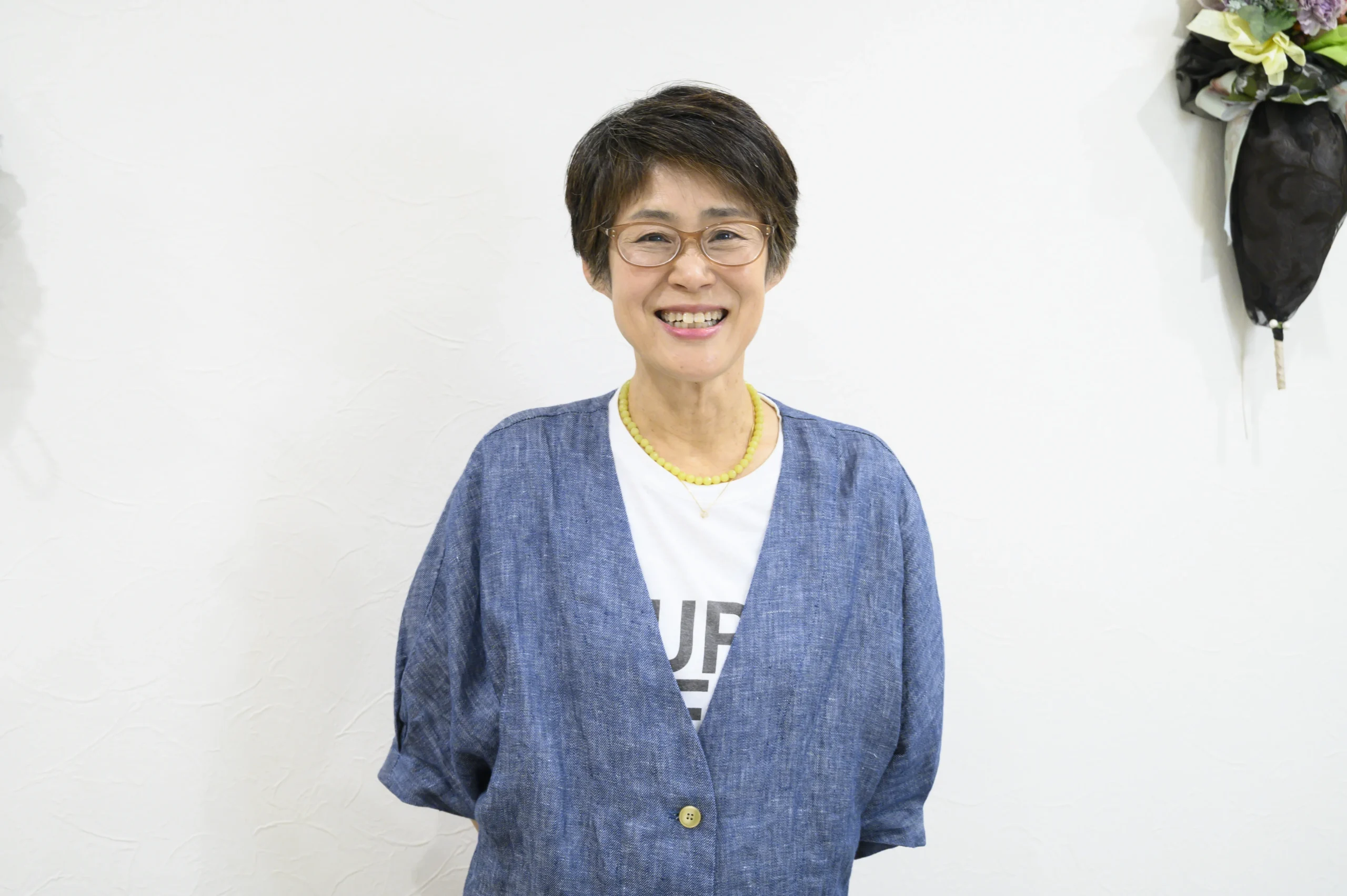
A Message to Our Visitors
When you receive your Seed Paper®, I hope you’ll enjoy planting it without hesitation. While it should be kept from drying out, it’s easy to grow—whether on a balcony or even indoors. With a little sunlight and daily care, the seeds will begin to sprout and, before long, reward you with beautiful flowers.
My greatest hope is that your experience of GREEN×EXPO 2027 will not end when you leave the venue. Instead, it will continue at home, through the simple and rewarding act of nurturing a living plant. If the time you spend caring for that small seed can become a lasting gift—one that brings moments of joy, curiosity, and connection with nature—I could ask for nothing more.
A Story That Begins with a Single Sheet of Paper
— What first inspired you to work with Seed Paper®?
Noguchi:
I originally worked in the music industry, introducing American roots music to audiences in Japan. One day, I received a Christmas card from a record label in the United States. Printed on it was a simple message:
“This card is made of Seed Paper®.”
When I learned that the paper could be planted in the soil and eventually bloom into flowers, I was captivated by the idea. It felt both wonderfully simple and profoundly inspiring.
Without hesitation, I contacted the manufacturer in the United States and became the official distributor of Seed Paper® in Japan.
One moment from those early days stands out clearly. A prominent artist—someone who was helping shape Japan’s music scene at the time—looked at the paper and said, “This is fascinating.” Soon afterwards, it was adopted as part of the artist’s official concert merchandise.
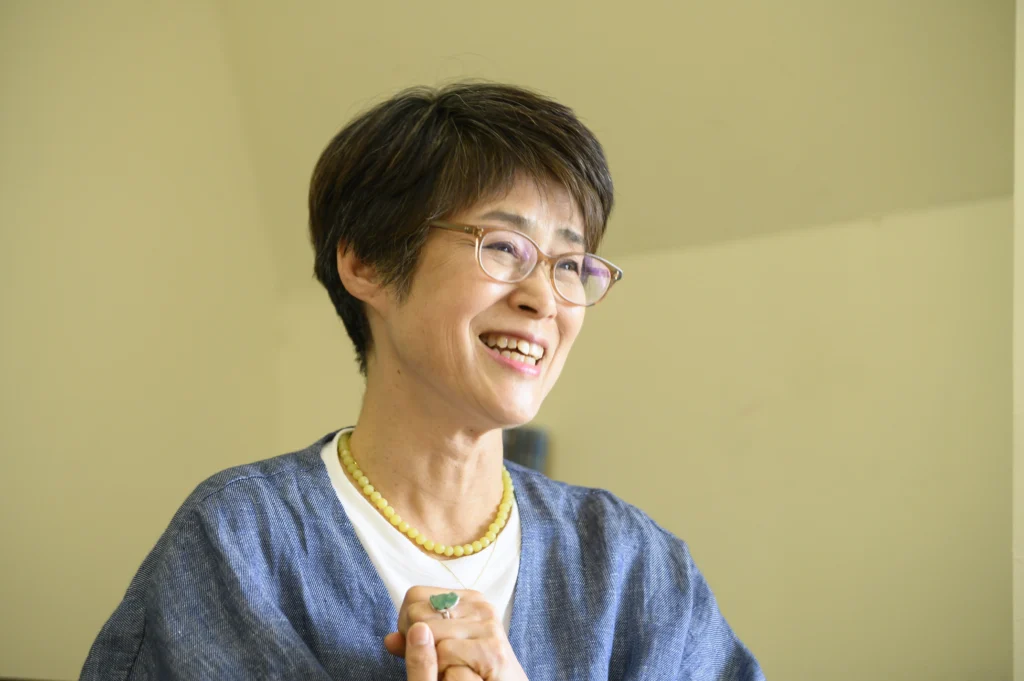
— How did Hanasaku Washi®, your Japanese-made Seed Paper®, come into being?
Noguchi:
As I continued importing and distributing Seed Paper®, I gradually began to wonder whether it might one day be possible to produce it here in Japan.
At that time, a paper wholesaler introduced me to Yamaju Paper, a workshop in Minobu, Yamanashi Prefecture, dedicated to preserving the centuries-old craft of Nishijima Washi. There, I met Mr. Kasai, the thirteenth-generation head of the family business. When I asked him, “Would it be possible to make handmade washi with seeds embedded in it?” he welcomed the idea with remarkable openness.
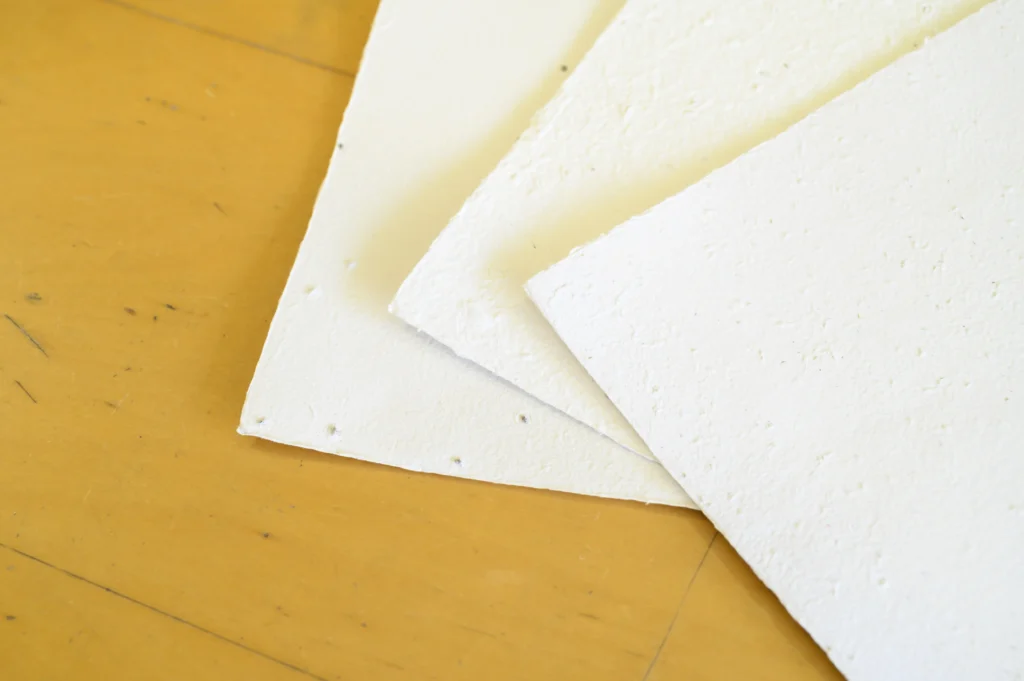
The primary raw material is shredded office paper collected from participating companies. Achieving the refined, luminous texture of traditional washi from recycled paper containing printed ink and text was only possible thanks to the ingenuity of the workshop’s artisans. Their solution was to blend the recycled fibers with offcuts generated during the production of Japanese calligraphy paper.
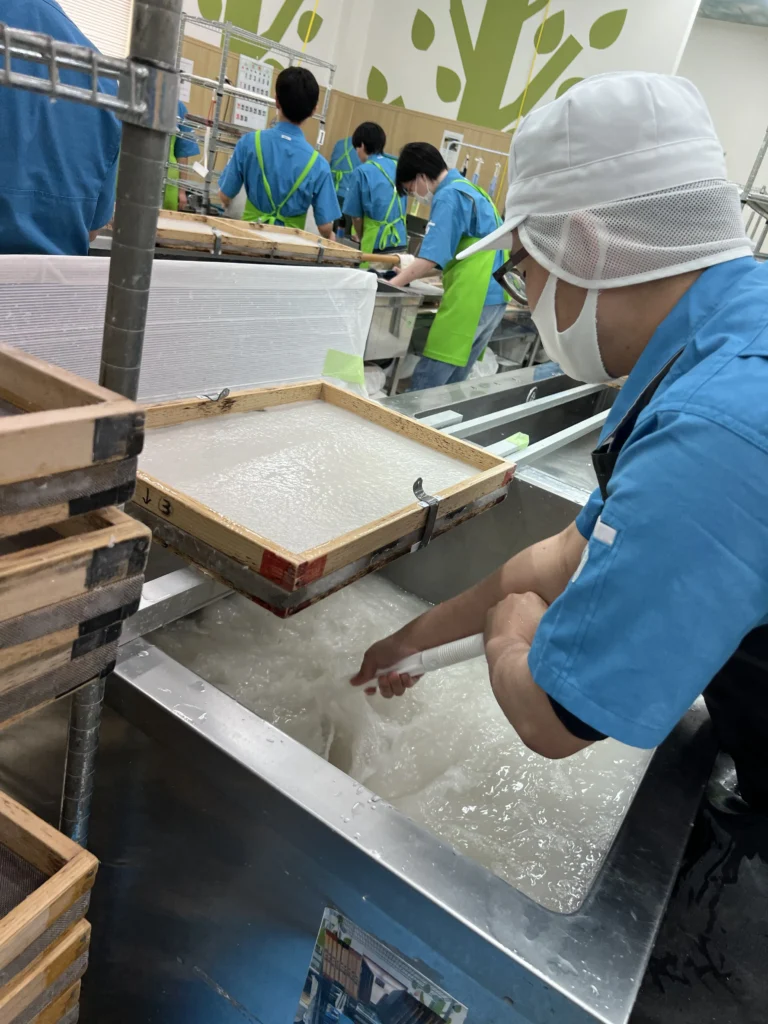
Every stage of the process requires exceptional care. The pulp must be prepared so that the seeds remain unharmed; the paper must be formed evenly by hand; and its thickness must be calibrated with remarkable precision—thin enough to encourage germination, yet strong enough to withstand handling. These delicate processes are made possible not by machines alone, but by the intuition and tactile expertise that master papermakers have refined over generations.
— How have you approached large-scale production for GREEN×EXPO 2027?
Noguchi:
Over the past five years, since launching domestic production, we have established two complementary manufacturing systems.
One is an integrated production line in Sagamihara, operated by a special subsidiary company, where every stage—from papermaking to final processing—is carried out under one roof. The other combines the expertise of a washi workshop in Yamanashi, where the paper is handcrafted, with that of a Type B Continuous Employment Support Center in Nagano, where it is carefully processed into finished products.
The leader of the Nagano facility is also a friend from my junior high school days. When he left a social welfare corporation to establish his own employment support center, he was among the very first to join us in bringing this vision to life.
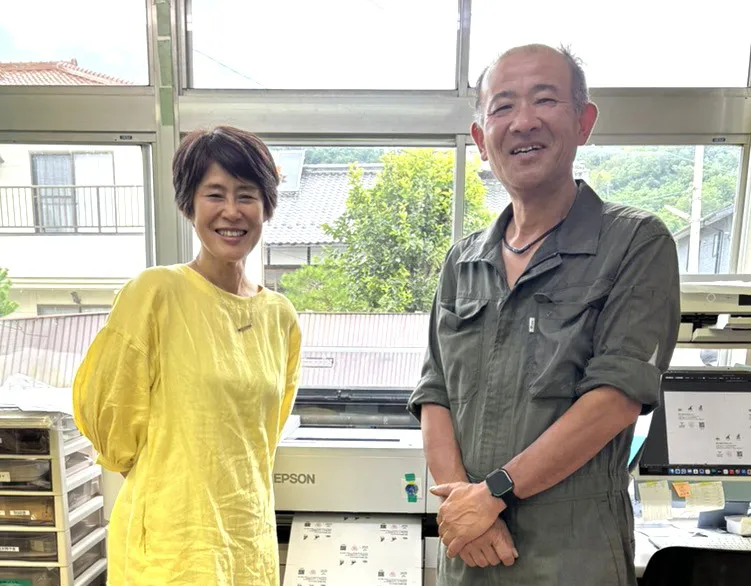
His vision extended far beyond welfare. He wanted to create products that people could take pride in—not because of who made them, but because of their exceptional quality. It was that passion that brought everyone together. Through countless rounds of collaboration, experimentation, and refinement, we built both the level of quality we aspired to and a production system capable of delivering it with confidence.
Then, about two years ago, we were invited to take part in GREEN×EXPO 2027. To meet the unprecedented scale of production, 13 welfare service providers across the City of Kamakura joined the project and took part in the assembly process. As this network of makers continues to grow, so too does our vision. In many ways, we are still growing alongside the project itself.
Behind the Scenes: Everything Begins with Pride
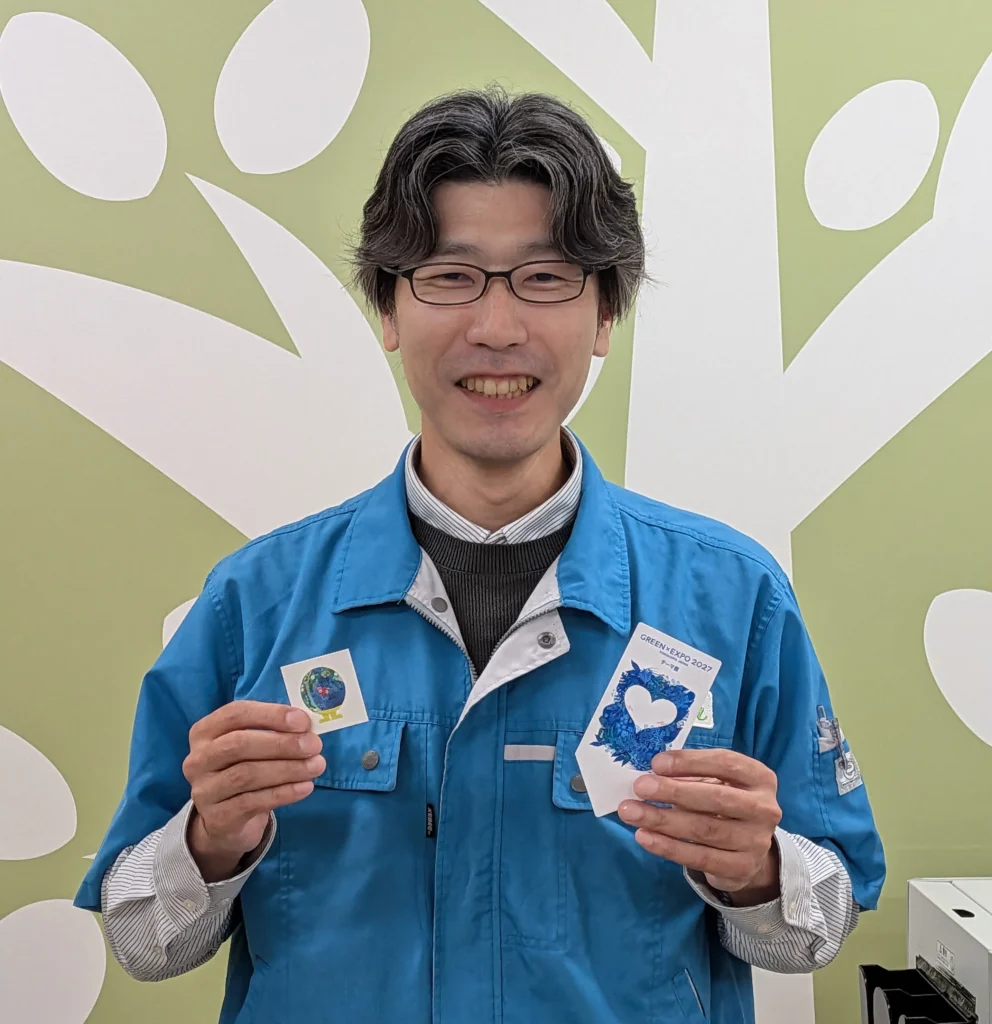
Leader, Papermaking Team
Open Up With Co., Ltd.
Large-scale production for GREEN×EXPO 2027 demands a high level of efficiency.
While introducing more machinery would undoubtedly increase output, we have chosen to place equal importance on something else: creating meaningful work and a place where every member of our team can thrive.
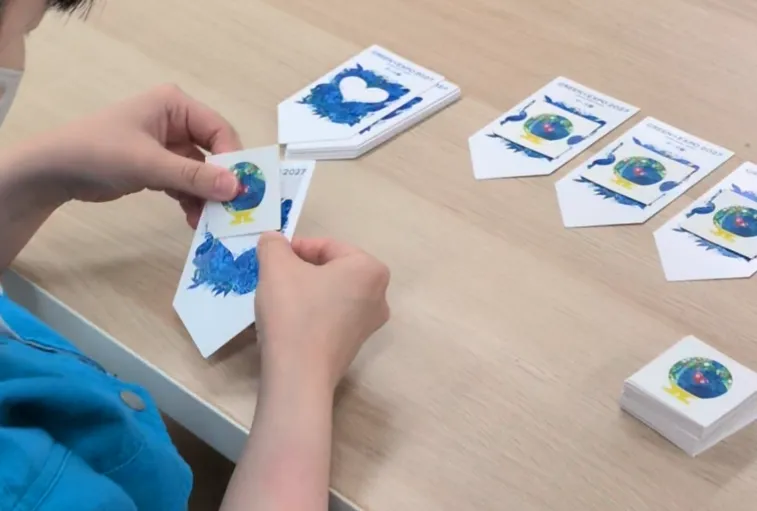
That is why we have intentionally preserved many of the hand-crafted stages of the process—from sorting recycled paper and making the sheets to assembling them onto their backing cards. These are not tasks we wish to automate away.
Our goal is not simply to manufacture large quantities, but to preserve the warmth and human touch that only handcrafted work can offer.
Everyone on our team approaches their work with genuine pride and dedication each day. Although Noguchi is technically our client, she has always stood beside us as a true partner—someone who shares our questions, our challenges, and our aspirations. In many ways, she has become a comrade in this journey.
Above all, we believe that creating something meaningful should also be an enjoyable experience. With that spirit, our entire team is proud to take on this remarkable challenge together.
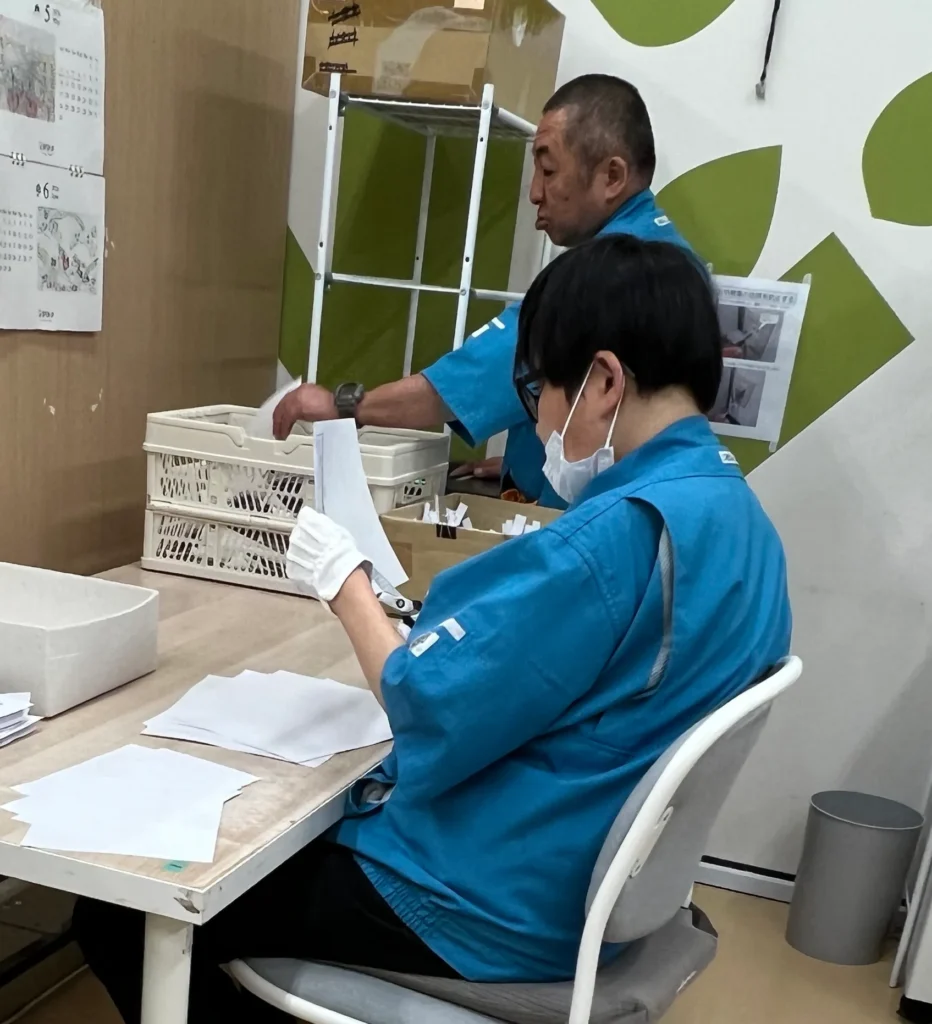
Carefully removing printed areas from recycled paper. A meticulous process that helps create brighter, purer paper for Seed Paper®.
President, SOUP Co., Ltd.
Setsuko Noguchi
In 1999, Setsuko Noguchi founded Buffalo Records, launching her career in the music industry. In 2009, she became the exclusive Japanese distributor of Seed Paper®, originally developed in the United States. The following year, she renamed the company SOUP Co., Ltd., shifting its primary focus to producing and distributing environmentally conscious promotional products.
In 2021, the company registered the trademark Seed Paper®, followed in 2022 by Hanasaku Washi®, a Japanese-made seed paper handcrafted from traditional washi. For GREEN×EXPO 2027, Noguchi is leading the largest mass-production project in the company's history, bringing this unique fusion of sustainability, craftsmanship, and innovation to an international stage.